
Mosque In Old Cairo
Mosque of Amr ibn al-As
The first mosque built in Africa, founded in 641 at the centre of Fustat. Rebuilt many times, but on the same ground.
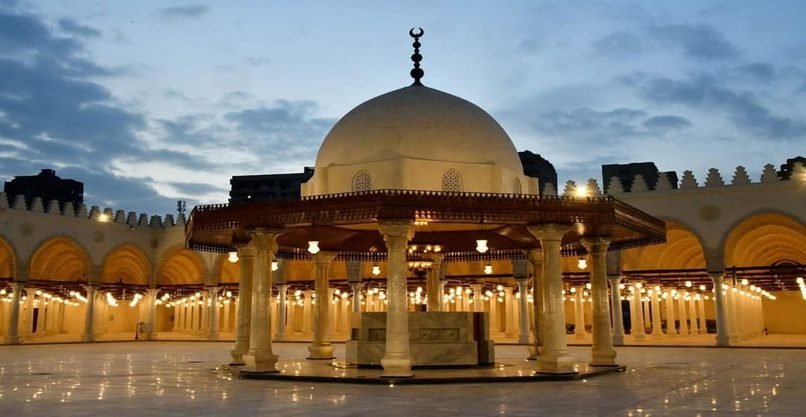
The Mosque of Amr ibn al-As is one of Cairo’s most important historic mosques and among the most prominent Islamic landmarks in Old Cairo. Its founding is tied to the city of Fustat, Egypt’s first Islamic capital, and it stands out for its historical and architectural importance and its role in the story of Islamic civilisation in Egypt.
History and construction
The mosque was founded in 641 AD by Amr ibn al-As after the conquest of Egypt, and was a central part of Fustat, which became the hub of government, administration and trade.
It is considered the first mosque built in Egypt and in Africa, and over its long history it has been enlarged and renovated many times, becoming one of the best-known historic mosques in Cairo.
Why is it called the Mosque of Amr ibn al-As?
The mosque is named after Amr ibn al-As, who led the Muslim conquest of Egypt and founded the city of Fustat.
The original mosque was simple in design; it was later enlarged and parts of it changed over the centuries through the building and restoration work of successive dynasties and rulers.
The mosque’s architecture
The mosque reflects several stages in the development of Islamic architecture in Egypt. It has a spacious courtyard surrounded by arcades, along with the mihrab, minbar and minarets. Some of its architectural features have changed over the centuries through enlargement and restoration, so the mosque combines influences from different historical periods.
The mosque and Fustat
The mosque is closely linked to the history of the city of Fustat, which grew up around it and became Egypt’s first Islamic capital. It was an important religious and scholarly centre and played a part in the city’s social and cultural life, making it a fundamental part of the history of Islamic Cairo.
The mosque and Old Cairo
The mosque lies in Old Cairo, close to a large number of historic and religious sites, including The Hanging Church, the Coptic Museum, Babylon Fortress and the Religions Compound.
Its location means you can explore several of the key chapters of Egyptian history in a single outing.
What to see at the Mosque of Amr ibn al-As
Visitors can explore:
- The spacious inner courtyard.
- The arcades and columns.
- The mihrab and minbar.
- The minarets and other architectural features.
- Details of historic Islamic architecture.
- The surrounding area and the remains of Fustat.
On Google Maps: Mosque of Amr ibn al-As