-
 by
Things in Cairo
by
Things in Cairo - 4 October، 2026
- 0 Comments

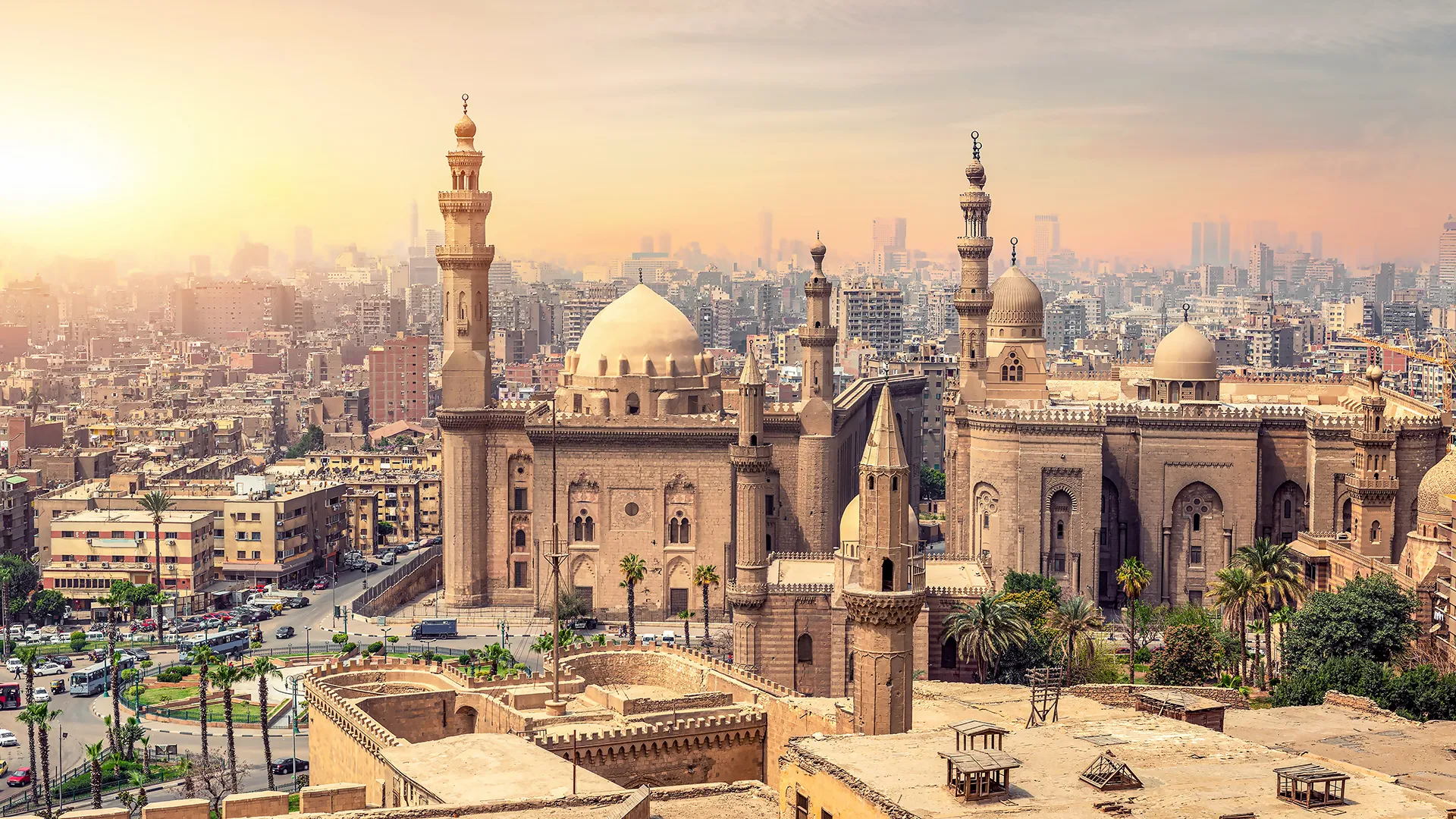
The Historic Cairo Revival Project is one of the largest heritage-area development schemes in the capital. It aims to rehabilitate a large number of historic and Islamic-era districts while preserving their architectural identity, improve streets, services and infrastructure, and create tourist routes that link landmarks together rather than leaving each area cut off from the next.
The project is not limited to restoring mosques and historic buildings. It also includes:
- Upgrading streets and squares
- Improving building façades
- Upgrading utilities
- Tree planting and green spaces
- Reorganising traffic
- Improving the areas around monuments
- Creating walkways and visitor routes
- Supporting local economic and cultural activity.
Cairo Governorate has stressed that the core vision of the project is to preserve the social and economic life of the historic fabric, while restoring Old Cairo to its place as a major tourist and cultural destination.
Which Areas Does the Historic Cairo Revival Project Cover?
The project is very broad. The areas announced by Cairo Governorate during 2026 include:
Bab Zuweila, Darb al-Labbana, Wekalet al-Shorbagy, Harat al-Rum, Mahmoudiya Garden, the Sultan Hassan and Al-Rifai area, Al-Hussein Mosque and its surroundings, Al-Banhawy Street, Al-Hakim bi-Amr Allah Mosque, Bab al-Azab, Sayeda Aisha, Imam al-Shafi’i, the Magra al-Uyoun Aqueduct and Sayeda Nafisa, along with other areas within Islamic Cairo and the historic city.
This shows that the project is not about upgrading a single site, but an attempt to reshape the experience of visiting historic Cairo as a whole.
Redeveloping Sayeda Aisha
One of the most important areas in the project right now is Sayeda Aisha. The district changed dramatically in 2026 after the removal of the old Sayeda Aisha flyover, which had been one of the area’s most prominent traffic features since the 1980s.
In March 2026, Cairo Governorate announced that demolition of the flyover was nearly complete, as part of a plan to redevelop the area, turn it into a more open tourist zone and connect it to the surrounding historic sites.
Following the flyover’s removal, work began on:
- Tree planting
- Improving pavements
- Reorganising traffic
- Upgrading open spaces
- Improving sightlines
- Linking the area to nearby historic sites.
Relocating the Sayeda Aisha Transport Terminal
Another significant change is the relocation of the Sayeda Aisha transport terminal.
In May 2026, Cairo Governorate announced that the terminal would move to a new site at the Souq al-Hamam exit off the new Salah Salem corridor, no more than about 700 metres from the previous temporary location.
The aim of the move is to reduce congestion around the historic area and prepare Sayeda Aisha Square for the next stages of tourism and urban development.
The Magra al-Uyoun Aqueduct
The Magra al-Uyoun Aqueduct is currently one of the key focal points of the Historic Cairo Revival Project.
During 2026, the work has included:
- Restoring the stonework
- Cleaning the surfaces
- Reopening blocked arches
- Clearing rubbish and encroachments
- Building a tourist walkway
- Upgrading the lighting
- Tree planting and landscaping
- Improving the surrounding streets.
In August 2026, Cairo Governorate announced the completion of phase one of the restoration of the aqueduct and the adjoining walkway, covering a stretch of about one kilometre from Sayeda Aisha Square to Mokattam Hospital.
The Magra al-Uyoun Walkway
The full walkway project runs for about 3 kilometres, from Mokattam Hospital to the Fumm al-Khalig Bridge.
Under the August 2026 plan, the whole project was due to be completed by the end of the year.
This is one of the most important tourism developments in the area, because it turns the aqueduct from a monument mostly glimpsed from the road into part of an organised walking experience.
Imam al-Shafi’i
The Imam al-Shafi’i area has also become part of the active development work in 2026.
On the most recent official inspection tour, on 30 September 2026, Cairo Governorate followed up on work in the area alongside Sayeda Aisha and the Magra al-Uyoun Aqueduct.
The work includes:
- Improving the urban environment
- Upgrading services
- Upgrading roads
- Restoring some heritage features
- Preparing the area to welcome visitors.
Officials also checked on the restoration of façades and heritage features in the area, carried out in coordination with the Ministry of Tourism and Antiquities and the National Organisation for Urban Harmony.
A Tourist Route from the Religions Complex to the Ahl al-Bayt Mosques
One of the project’s key ideas is to create an integrated tourist route instead of visiting each landmark on its own.
According to Cairo Governorate, the work in Sayeda Aisha and along the Magra al-Uyoun Aqueduct aims to create a tourist zone linking:
the Religions Complex → the Magra al-Uyoun Aqueduct → Sayeda Aisha → the Ahl al-Bayt mosques
while making the most of the nearby Fustat Hills.
This could transform the way people visit Old Cairo, as visitors would be able to move between several historic areas along a single route.
Fustat Hills: Part of the Bigger Picture
Although the Fustat Hills project is relatively separate, it is linked geographically and in tourism terms to the Historic Cairo revival plan.
Cairo Governorate itself ties the development of the Magra al-Uyoun Aqueduct, Fustat Hills and the surrounding religious sites into a single tourism vision.
That puts Old Cairo and Fustat in line to become one of the largest open visitor areas in Cairo.
Upgrading Al-Hakim bi-Amr Allah Mosque and Its Surroundings
The Historic Cairo Revival Project also covers Al-Hakim bi-Amr Allah Mosque and the areas around it.
Cairo Governorate has confirmed that the work covers:
- Al-Hakim Mosque
- The surrounding streets
- The areas behind the mosque
- The historic entrances
- Improving the urban environment and services.
This ties in directly with the upgrade of the northern end of Al-Muizz Street and the Gamaliya district.
Bab al-Futuh and Bab al-Nasr
The Al-Hakim Mosque area is linked to two of historic Cairo’s most important gates: Bab al-Futuh and Bab al-Nasr.
Bab al-Futuh stands a very short distance from Bab al-Nasr, right next to Al-Hakim Mosque, and is one of the most important surviving sections of the walls of Fatimid Cairo.
Upgrading this area makes it possible to create a clear route that starts at the gates of the old city and then leads into Al-Muizz Street.
Bab Zuweila and Darb al-Labbana
At the other end of historic Cairo, the project also includes Bab Zuweila and Darb al-Labbana.
Cairo Governorate explicitly lists these areas among those currently being upgraded.
This matters because Bab Zuweila is one of the most important southern gateways to Fatimid Cairo, while Darb al-Labbana extends towards the Citadel area and the mosques of Sultan Hassan and Al-Rifai.
Harat al-Rum
The plan also includes Harat al-Rum, one of the well-known historic quarters near Al-Ghouriya and Darb al-Ahmar.
The aim is not to strip the area of its working-class character, but to improve services and infrastructure while preserving the urban fabric and local activity.
Mahmoudiya Garden
Mahmoudiya Garden appears on the list of areas covered by the project.
It overlooks the area around Sultan Hassan Mosque and Al-Rifai Mosque, so upgrading it is an opportunity to improve the setting of one of Cairo’s best-known historic sites.
Sultan Hassan and Al-Rifai Mosques
The area around the Mosque-Madrasa of Sultan Hassan and Al-Rifai Mosque is one of the most important parts of Islamic Cairo, thanks to its links with the Citadel and Salah al-Din Square.
Upgrading the spaces and entrances around this area helps create a better-organised experience between:
the Citadel → Sultan Hassan → Al-Rifai → Bab al-Azab → Darb al-Ahmar
This is one of the most promising routes in Cairo for tourism development.
Bab al-Azab
Bab al-Azab is also on the list of sites being upgraded.
The gate is part of the Citadel of Saladin complex and overlooks Salah al-Din Square, so improving its surroundings is key to linking the Citadel with the historic mosques below it.
Al-Hussein Mosque and Its Surroundings
The work also covers the entrance and exit gates of Al-Hussein Mosque and Al-Hussein University Hospital, as well as the surrounding areas.
This builds on earlier upgrades in the Al-Hussein area, with the aim of improving the flow of visitors and pedestrians through one of the busiest parts of historic Cairo.
Sayeda Nafisa
The Sayeda Nafisa area was also included in the tree-planting and beautification work under way in Islamic Cairo in June 2026.
The work included planting trees and ornamental beds and improving roads and main routes around Sayeda Aisha, Sayeda Nafisa and the Magra al-Uyoun Aqueduct.
This reflects a move towards creating one continuous religious and historic zone, rather than upgrading each mosque in isolation.
More Than Just Restoring Monuments
One of the key things that sets the Historic Cairo Revival Project apart is that the goal is not simply to restore a mosque or a historic gate.
The project is built on bringing together:
heritage + residents + roads + commercial activity + tourism + public spaces
Cairo Governorate stresses that the project aims to preserve the existing social and economic life within the historic areas, rather than turning them into an open-air museum cut off from the people who live there.
What Changed in 2026?
2026 was a very important year for the project. Highlights include:
- Removal of the Sayeda Aisha flyover
- Relocation of the Sayeda Aisha transport terminal
- Completion of phase one of the Magra al-Uyoun Aqueduct works
- Start of phase two of the walkway
- Upgrading of the Imam al-Shafi’i area
- Tree planting in Sayeda Aisha and Sayeda Nafisa
- Ongoing upgrades to Al-Hakim Mosque and its surroundings
- Continued work on Bab Zuweila, Darb al-Labbana and Bab al-Azab
- Better tourist links between Old Cairo and Islamic Cairo.
How Will the Project Affect Tourism in Cairo?
If the routes are completed as planned, the experience of visiting historic Cairo could change considerably.
Instead of driving between separate sites, visitors could follow connected walking routes such as:
the Religions Complex → Fustat Hills → the Magra al-Uyoun Aqueduct → Sayeda Aisha → Imam al-Shafi’i
or:
Bab al-Futuh → Al-Hakim Mosque → Al-Muizz Street → Al-Hussein → Al-Ghouriya → Bab Zuweila
or:
the Citadel → Sultan Hassan → Al-Rifai → Bab al-Azab → Darb al-Ahmar
This would offer an experience closer to that of the world’s great historic cities, where entire districts can be explored on foot.
Is the Project Finished?
No. Some parts have been completed or are at an advanced stage, such as phase one of the Magra al-Uyoun Aqueduct, but other areas are still being developed.
As of September 2026, work in Imam al-Shafi’i and Sayeda Aisha and on phase two of the Magra al-Uyoun walkway was still ongoing.
So it is best to think of the Historic Cairo Revival Project as an ongoing project rather than a finished one.
Historic Cairo Revival vs the Khedivial Cairo Redevelopment
It is important not to confuse the two projects.
The Historic Cairo Revival Project focuses mainly on:
- Islamic Cairo
- Gamaliya
- Darb al-Ahmar
- Sayeda Aisha
- Imam al-Shafi’i
- Religious and heritage areas.
The Khedivial Cairo redevelopment, on the other hand, focuses on Downtown Cairo, including:
- Tahrir Square
- Talaat Harb
- Mustafa Kamel
- Opera Square
- Qasr al-Nil Street
- 26th of July Street.
Both projects are part of a wider drive to revive Cairo’s heritage areas, but they differ in their geographical and historical scope.
Historic Cairo Revival Project: Frequently Asked Questions
What is the Historic Cairo Revival Project?
It is an integrated project to develop Cairo’s historic areas, combining the restoration of monuments with improvements to streets, services, utilities and public spaces, while preserving the city’s architectural identity.
Which areas does the project cover?
It covers many areas, including Sayeda Aisha, the Magra al-Uyoun Aqueduct, Imam al-Shafi’i, Bab Zuweila, Darb al-Labbana, Harat al-Rum, Al-Hakim Mosque, Bab al-Azab and Sayeda Nafisa.
What has happened to the Magra al-Uyoun Aqueduct?
Phase one of the restoration work and the tourist walkway was completed in August 2026, and phase two has continued since then.
Is there a new walkway along the Magra al-Uyoun Aqueduct?
Yes. A tourist walkway is being built alongside the aqueduct as part of a project that, once complete, will run for about 3 kilometres.
Is Al-Hakim bi-Amr Allah Mosque part of the project?
Yes. The mosque and the area around it are included in the Historic Cairo and Gamaliya revival projects.
Is the project linked to Fustat Hills?
Yes, in terms of tourism and geography. The plan aims to link the Magra al-Uyoun Aqueduct and Sayeda Aisha with the Religions Complex, Fustat Hills and the Ahl al-Bayt mosques.
Has the Historic Cairo Revival Project been completed?
No. The project is still ongoing as of October 2026, and development and restoration work is still taking place in some areas.