
Monument In Old Cairo
Babylon Fortress
The Roman walls and round towers that the whole Coptic quarter grew inside.
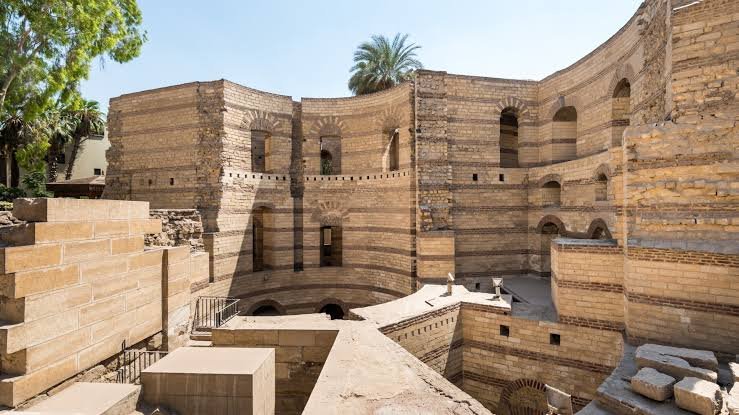
Babylon Fortress is one of the most important historic sites in Old Cairo and a key part of the area’s history during the Roman and Coptic eras. The fortress lies near the Religions Compound and is surrounded by some of the city’s best-known religious and historic landmarks, making it an essential stop for anyone interested in history and archaeology.
History of Babylon Fortress
Babylon Fortress has a long history stretching back to ancient times. Its fortifications were developed during the Roman era to protect the area and secure its strategic position near the Nile.
The fortress saw important events during the Roman, Byzantine and Coptic periods, and later became part of the area around which Fustat grew after the arrival of Islam in Egypt.
Why is it called Babylon Fortress?
Opinions differ on the origin of the name Babylon; historically, it is linked to the area that was known as Babylon during the Roman era.
Today the name refers to the remains of the historic fortress in Old Cairo, which have become one of the most striking reminders of Cairo’s history before the city took its present form.
The fortress’s architecture
The fortress was built as a strong defensive structure from massive stone blocks, with towers and walls that helped protect the area.
Parts of the fortress are still visible today, and some of its towers and features became linked to religious buildings later built in the area.
The fortress and The Hanging Church
The Hanging Church is closely linked to the fortress: it was built on top of one of Babylon Fortress’s towers, which partly explains its popular name.
Visiting the fortress and The Hanging Church together is a great way to see the relationship between Roman military architecture and Coptic architecture in Old Cairo.
The fortress and the Religions Compound
The fortress sits in an area with a varied mix of religious and historic sites, including the Coptic Museum, the Church of Abu Serga, the Ben Ezra Synagogue and The Hanging Church.
This historic cluster reflects the religious and cultural diversity the area has known over many centuries.
Babylon Fortress and Fustat
The fortress lies near the site of Fustat, which was founded in the 7th century AD and became Egypt’s first Islamic capital.
The position of the fortress and Fustat close to the Nile helped make the area an important centre of political, commercial and urban life at various stages of Egypt’s history.
Why visit Babylon Fortress?
The fortress represents an important layer of Cairo’s history and lets you explore Roman and Coptic remains in a single area.
Its proximity to the historic churches, the Coptic Museum and the Religions Compound also makes it an easy fit for a cultural and historical tour of Old Cairo.
Visiting Babylon Fortress
Allow a few hours to explore the fortress and the sights around it, especially if you plan to visit the Religions Compound, the Coptic Museum and the historic churches on the same day.
It is also a good idea to check opening times and any visitor rules before heading to the area.
Frequently asked questions about Babylon Fortress
On Google Maps: Babylon Fortress