
Monument In El Rhoda
The Nilometer
A measuring column of 861 at the southern tip of Rhoda, sunk in a stone shaft that once decided the year's taxes.
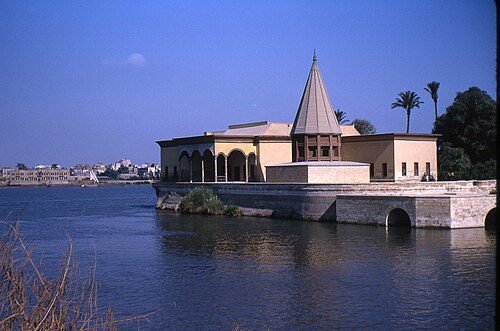
The Nilometer on Rawda Island is one of Cairo’s most important historic sites and one of the oldest surviving structures built to measure the level of the Nile. It shows just how central the river was to Egyptian civilisation, and its role in farming, water management and daily life throughout history.
History of the Nilometer
The present Nilometer dates from the Abbasid era: it was built in the 9th century AD during the reign of the Abbasid caliph Al-Mutawakkil.
It was placed on Rawda Island because of the island’s key position on the river, where the water level was a vital indicator of how big the annual flood would be and how to prepare for the farming season.
Why was the Nilometer built?
Measuring the level of the Nile was hugely important in Egypt, because the flood was directly tied to farming and the water supply.
The Nilometer showed how high the river had risen, and so how good the flood was likely to be – and what that meant for farmland, taxes and the management of agriculture.
The design of the Nilometer
The Nilometer consists of a square well or basin connected to the Nile, with a graduated marble column at its centre for measuring the height of the water.
Its walls carry historic inscriptions, and its design made it possible to follow changes in the water level during the flood season.
It’s a fine example of engineering and architecture put to practical use in managing natural resources.
The Nilometer’s importance in Egyptian history
The Nilometer played an important part in Egypt’s economy and administration, because the level of the flood directly affected farmland and harvests.
A low reading could signal a weak flood and a likely fall in agricultural output, while water rising to the right level was a sign of a more bountiful season.
Where is the Nilometer?
The Nilometer stands at the southern tip of Rawda Island in Cairo, close to the Manial neighbourhood and the Nile.
It’s close to several historic sights, above all the Manial Palace Museum, so you can easily take in more than one place on the same trip.
Visitors can see:
- The column used to measure the water level.
- The basin connected to the Nile.
- The historic inscriptions.
- The Nilometer’s architectural features.
- Views of the Nile around the site.
A visit is also a chance to learn how Egyptians historically monitored the Nile and managed their water resources.
Location on Google Maps: The Nilometer