-
 by
Things in Cairo
by
Things in Cairo - 13 September، 2026
- 0 Comments

The East Nile Monorail has become one of the most important modern transport links between East Cairo, New Cairo and the New Administrative Capital, especially since the entire line opened to passengers in 2026.
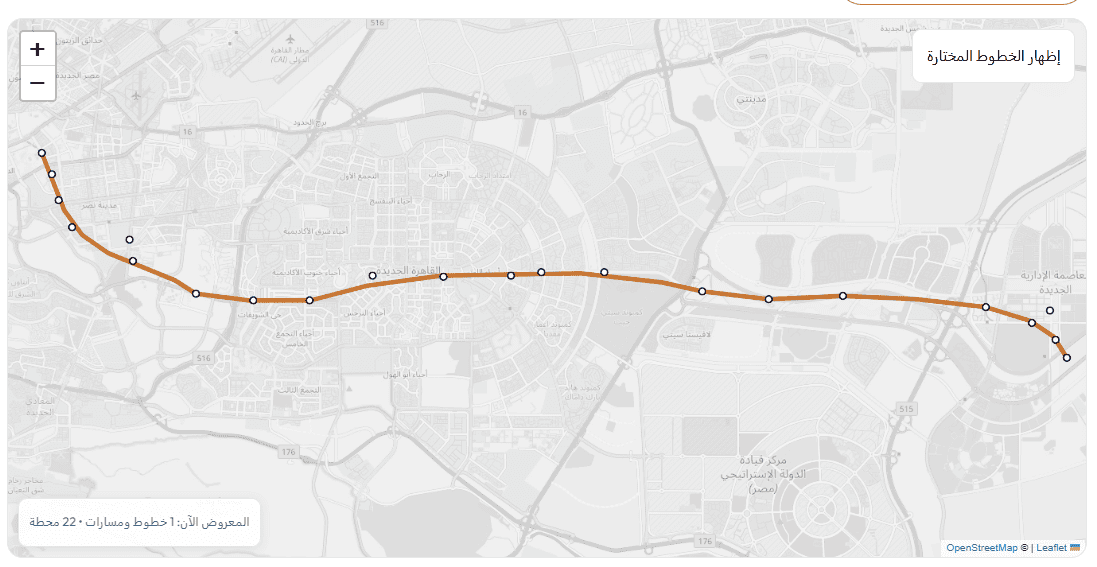
The line runs from Cairo Stadium station in Nasr City to Justice City (Madinat Al-Adala) in the New Administrative Capital, passing through a large number of residential, commercial and administrative areas in Nasr City, the Fifth Settlement and the New Capital.
The monorail is a major addition to Greater Cairo’s mass transit network. Rather than operating as a stand-alone line, it connects with several other key transport services, including Cairo Metro Line 3, the BRT (Bus Rapid Transit) and the LRT (Light Rail Transit).
This means passengers can travel from central and western Cairo to New Cairo and the Administrative Capital by public transport, without relying entirely on private cars.
You can also take a look at our guide to the Cairo Monorail and its stations.
According to official figures, the East Nile Monorail is around 56.5 kilometres long and has 22 stations, linking Nasr City, New Cairo and the New Administrative Capital.
The trains have a design speed of around 80 km/h, and an end-to-end journey takes roughly an hour to 70 minutes, depending on the service pattern and stops.
What is the East Nile Monorail?
The monorail is an electric train system that runs on an elevated track separated from road traffic, which allows it to avoid many of the junctions and traffic lights found at street level.
The East Nile Monorail runs above several major corridors in East Cairo, starting in Nasr City, passing through New Cairo, 90th Street and the surrounding areas, before heading on to the New Administrative Capital.
The route is particularly useful for office workers, students and New Cairo residents, as well as for anyone heading to the ministries, government bodies and business districts of the New Capital.
The project was officially inaugurated in March 2026, and the section from Marshal Tantawi to Justice City opened to the public in May.
In June 2026 the section between Cairo Stadium and Marshal Tantawi began operating, making the full line available to passengers across 22 stations from Cairo Stadium to Justice City.
East Nile Monorail stations in order
The line starts in Nasr City, crosses into New Cairo and then enters the New Administrative Capital.
Here are the East Nile Monorail stations in order:
- Cairo Stadium
- Al-Azhar University
- Seventh District
- Marshal Ahmed Ismail
- Jehan Sadat
- Marshal Tantawi
- One Ninety
- Air Force Hospital
- El Narges
- Investors Area
- El Lotus
- Golden Square
- Beit El Watan
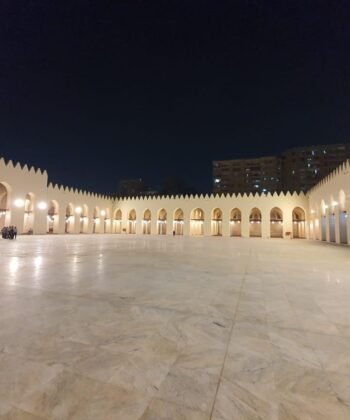
- Al-Fattah Al-Aleem Mosque
- R1 District
- R2 District
- Central Business District (CBD)
- Arts and Culture City
- Government District
- Masjid Misr (Egypt Mosque)
- Justice City (Madinat Al-Adala)
So the line does more than just reach the Administrative Capital: it is also an important link between Nasr City, the Fifth Settlement and the different parts of New Cairo.
Where does the East Nile Monorail start and end?
The East Nile Monorail starts at Cairo Stadium station in Nasr City, a key point because it lets passengers change between the monorail and Metro Line 3.
The line then passes through several busy parts of Nasr City, including Al-Azhar University and the Seventh District, before heading east towards the Marshal Tantawi Axis and New Cairo.
Once it reaches the Fifth Settlement, the monorail serves several key areas around 90th Street and New Cairo, such as One Ninety, El Narges, the Investors Area, El Lotus, Golden Square and Beit El Watan.
The line then enters the New Administrative Capital via the Al-Fattah Al-Aleem Mosque area and passes through the R1 and R2 districts, the Central Business District, the Arts and Culture City, the Government District and Masjid Misr, before reaching Justice City.
Connections between the East Nile Monorail and the Cairo Metro
One of the biggest advantages of the East Nile Monorail is that it is not cut off from the rest of Cairo’s transport network.
At Cairo Stadium station, passengers can change between the East Nile Monorail and Metro Line 3.
This connection matters for passengers coming from areas such as Heliopolis, Downtown Cairo, Zamalek, Imbaba, Mohandessin and other areas linked to Line 3, either directly or via interchange stations.
For example, a passenger coming from Downtown can take the metro to Cairo Stadium, then switch to the monorail and continue towards New Cairo or the Administrative Capital.
That is why Cairo Stadium is one of the most important stations on the East Nile Monorail.
Connections between the monorail and the LRT
Another important connection is at Arts and Culture City station in the New Administrative Capital, where passengers can change between the East Nile Monorail and the LRT (Light Rail Transit).
This makes the station all the more important as a link between two major transport networks serving East Cairo and the new cities.
Through this connection, passengers can continue their journey on the LRT to other areas served by the light rail network.
Connections with the BRT
The East Nile Monorail also connects with the BRT (Bus Rapid Transit) network around Marshal Tantawi and the Ring Road.
This makes Marshal Tantawi station one of the most important interchanges in East Cairo’s transport network.
This connection is useful for passengers arriving via the Ring Road or heading to other parts of Greater Cairo by BRT.
With the metro, monorail, LRT and BRT now working together, getting around Cairo by public transport is far more practical than it used to be.
Are future metro lines planned to connect with the monorail?
Plans for the future transport network include additional interchange points between the monorail and Cairo Metro lines.
Hesham Barakat station is planned to become a future interchange with Metro Line 4.
There are also plans to link El Narges station with other transport lines in future, as part of the expansion of East Cairo’s transport network.
These expansions should make the monorail an even more integrated part of Greater Cairo’s mass transit network.
East Nile Monorail operating hours 2026
The monorail’s operating hours have changed several times since services began, so it is worth checking the latest timetable before you travel.
According to the timetables published in September 2026, the East Nile Monorail starts running daily at around 6:00am from both ends of the line.
Trains run at regular intervals throughout the day, with particular attention to the morning and evening rush hours.
Hours may change on public holidays and special occasions, or when service plans are updated, so it is always best to check the latest times before an important journey.
East Nile Monorail ticket prices
The price of an East Nile Monorail ticket depends on the number of stations you travel.
Under the announced fare structure, tickets are split into bands according to the number of stations used.
The announced fares include:
- Up to 5 stations: around EGP 20.
- Up to 10 stations: around EGP 40.
- Up to 15 stations: around EGP 55.
- More than 15 stations, up to the full length of the line: around EGP 80.
Subscription passes are also available for regular passengers, and may be especially suitable for office workers, students and residents of New Cairo and the Administrative Capital.
It is always a good idea to check the current fare at the station, as prices may be revised in future.
How long does the journey from Cairo Stadium to the Administrative Capital take?
The full East Nile Monorail journey from Cairo Stadium to the New Administrative Capital takes roughly 60 to 70 minutes.
Your actual journey time depends on where you board and where you get off, as well as how long you wait for the train.
For passengers starting from the Fifth Settlement or New Cairo, the trip to the Administrative Capital is much shorter than the full journey from Nasr City.
The East Nile Monorail and the New Administrative Capital
The East Nile Monorail serves the Administrative Capital through a large number of important stations.
The main ones include Al-Fattah Al-Aleem Mosque station:
followed by R1 District station:
then Central Business District (CBD) station:
The Central Business District station serves one of the Administrative Capital’s main hubs for jobs, companies and high-rise towers.
Next, the line reaches Arts and Culture City station:
then Government District station:
From there the line continues to Masjid Misr and Justice City.
Which areas does the East Nile Monorail serve?
What makes the East Nile Monorail so useful is that its stations are not concentrated in one area.
In Nasr City, the line serves key areas around Cairo Stadium, Al-Azhar University and the Seventh District.
In New Cairo, it passes close to busy commercial and residential areas such as One Ninety, El Narges, the Investors Area, El Lotus, Golden Square and Beit El Watan.
Within the New Administrative Capital, it serves several of the city’s main areas, including Al-Fattah Al-Aleem Mosque, R1, R2, the Central Business District, the Arts and Culture City and the Government District.
So you can use the monorail to get to work, a residential area, a university, a hospital or a shopping area close to the line.
Is the East Nile Monorail driverless?
The East Nile Monorail was designed for automated operation using modern control and communications technology. The whole line is electric and runs on an elevated track, separate from road traffic.
Stations have a range of safety features and facilities, including platform screen doors, lifts, escalators, and step-free routes and services for people with disabilities.
Keeping the track completely separate from ordinary roads helps reduce the impact of traffic congestion and busy junctions.
What is the difference between the East Nile Monorail and the Cairo Metro?
Although the monorail and the metro do a similar job, moving large numbers of passengers, the two networks are designed differently.
Much of the Cairo Metro runs in tunnels or on conventional surface and elevated tracks.
The East Nile Monorail, by contrast, runs almost entirely on its own dedicated elevated track.
The metro also serves Cairo and Giza widely, whereas the East Nile Monorail focuses mainly on Nasr City, New Cairo and the Administrative Capital.
The two are not alternatives to each other; they work together as part of a single network.
The best example is Cairo Stadium station, where passengers can change between Metro Line 3 and the East Nile Monorail.
How do I get to the Administrative Capital by monorail?
If you are near a Metro Line 3 station, you can travel to Cairo Stadium and then change to the East Nile Monorail towards Justice City.
If you are in New Cairo or the Fifth Settlement, you can use whichever station is closest to you, such as:
- Marshal Tantawi.
- One Ninety.
- Air Force Hospital.
- El Narges.
- Investors Area.
- El Lotus.
- Golden Square.
- Beit El Watan.
Once inside the Administrative Capital, get off at the station nearest your destination, whether that is Al-Fattah Al-Aleem Mosque, R1, R2, the Central Business District, the Arts and Culture City, the Government District, Masjid Misr or Justice City.
Is the East Nile Monorail useful for visitors to Cairo?
For tourists and visitors, the monorail does not replace the metro network, as its route is concentrated in East Cairo.
Even so, it is a very practical way to travel between Nasr City, New Cairo and the Administrative Capital.
Its connection with Metro Line 3 at Cairo Stadium also makes it easy to reach from many parts of Cairo.
If you plan to use public transport during your visit, our Cairo guide pages can help you get to know each station and the areas it serves.
Guide to the Cairo Monorail and its stations
Is the East Nile Monorail running now?
Yes. The East Nile Monorail runs along its full route between Cairo Stadium and Justice City, serving 22 stations.
Public services began in stages during 2026, before the section connecting to Cairo Stadium was completed.
So older articles stating that the line starts at Marshal Tantawi, or that fewer than 22 stations are open, may be out of date and do not reflect the current service.
Why does the East Nile Monorail matter for Cairo?
The project matters because it links some of the fastest-growing parts of Greater Cairo.
Nasr City is densely populated and home to universities and major sports and shopping centres.
New Cairo has extensive residential neighbourhoods, business centres, universities, malls and companies.
Meanwhile, the New Administrative Capital has become home to a large number of ministries, government bodies, companies and business districts.
A direct mass transit link between these areas can therefore reduce dependence on private cars and offer a more reliable option for daily commutes.
East Cairo’s transport network
The East Nile Monorail should not be seen as a stand-alone project.
It is part of a wider network that includes:
- The Cairo Metro.
- The LRT (Light Rail Transit).
- The BRT (Bus Rapid Transit).
- Bus and public transport networks.
Passengers can change from the Cairo Metro to the monorail at Cairo Stadium.
They can also change between the monorail and the BRT near Marshal Tantawi.
And at Arts and Culture City, they can change between the monorail and the LRT.
This integration is one of the main reasons the East Nile Monorail is far more useful than a stand-alone railway line.
East Nile Monorail FAQs
How many stations does the East Nile Monorail have?
The East Nile Monorail has 22 stations, running from Cairo Stadium in Nasr City to Justice City in the New Administrative Capital.
What is the first station on the East Nile Monorail?
Cairo Stadium station is the start of the line at the Nasr City end.
What is the last station on the East Nile Monorail?
The line terminates at Justice City station in the Administrative Capital.
Does the monorail go to the Fifth Settlement?
Yes. The East Nile Monorail serves many parts of New Cairo and the Fifth Settlement, such as El Narges, the Investors Area, El Lotus, Golden Square and Beit El Watan.
Does the monorail go to the Administrative Capital?
Yes. The East Nile Monorail runs into the Administrative Capital and serves several key areas, including Al-Fattah Al-Aleem Mosque, R1, R2, the Central Business District, the Arts and Culture City and the Government District.
Can I change from the metro to the monorail?
Yes. You can change from Cairo Metro Line 3 to the East Nile Monorail at Cairo Stadium station.
Does the monorail connect with the LRT?
Yes. There is an interchange between the East Nile Monorail and the LRT (Light Rail Transit) at Arts and Culture City station in the Administrative Capital.
Is the monorail faster than driving?
It depends on where you start and when you travel.
The monorail’s main advantage is that it runs on its own track, separate from road traffic, so it is not directly affected by Cairo’s usual congestion.
Which station is best for the Government District?
Get off at Government District station in the Administrative Capital.
Which station is best for the Central Business District?
Use Central Business District (CBD) station.
Summary
The East Nile Monorail has become one of Cairo’s most important modern transport lines, running from Cairo Stadium in Nasr City all the way to the New Administrative Capital.
The line passes through New Cairo and the Fifth Settlement, serving key residential, commercial and administrative areas, and connects with Cairo Metro Line 3, the LRT and the BRT.
This integration turns the monorail from simply a way to reach the Administrative Capital into a core part of East Cairo’s mass transit network.
To find out more about the line and its stations, visit: