Church In Mokattam
The Cave Church
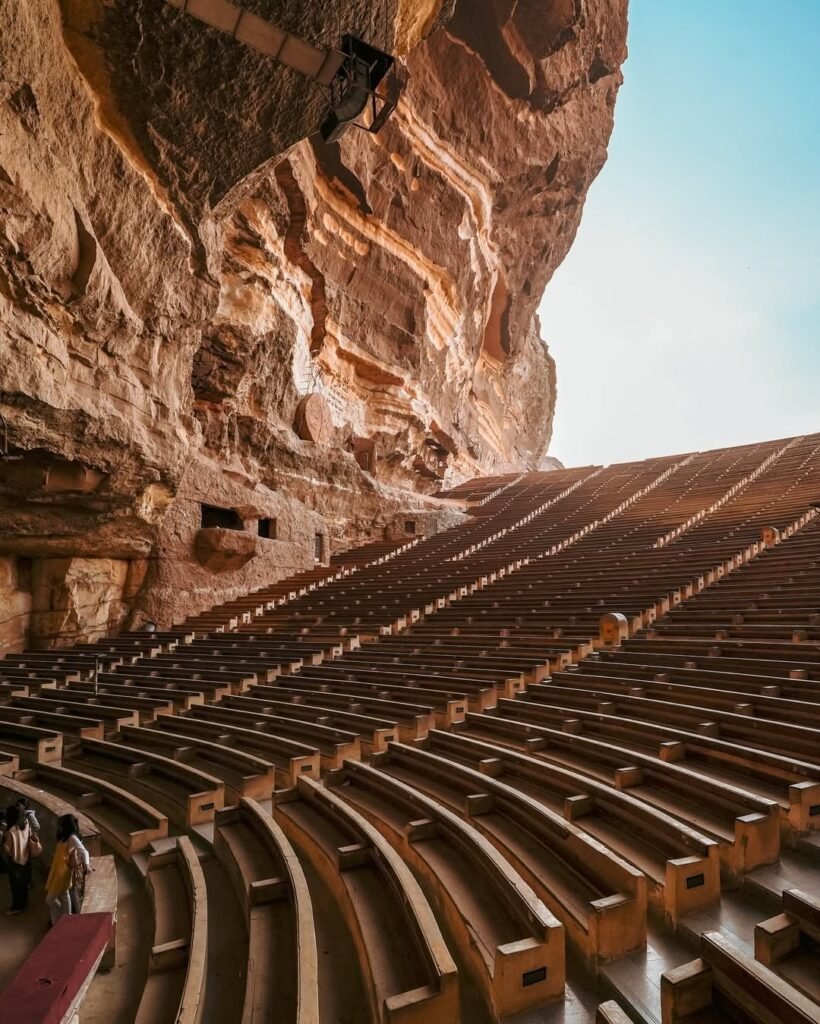
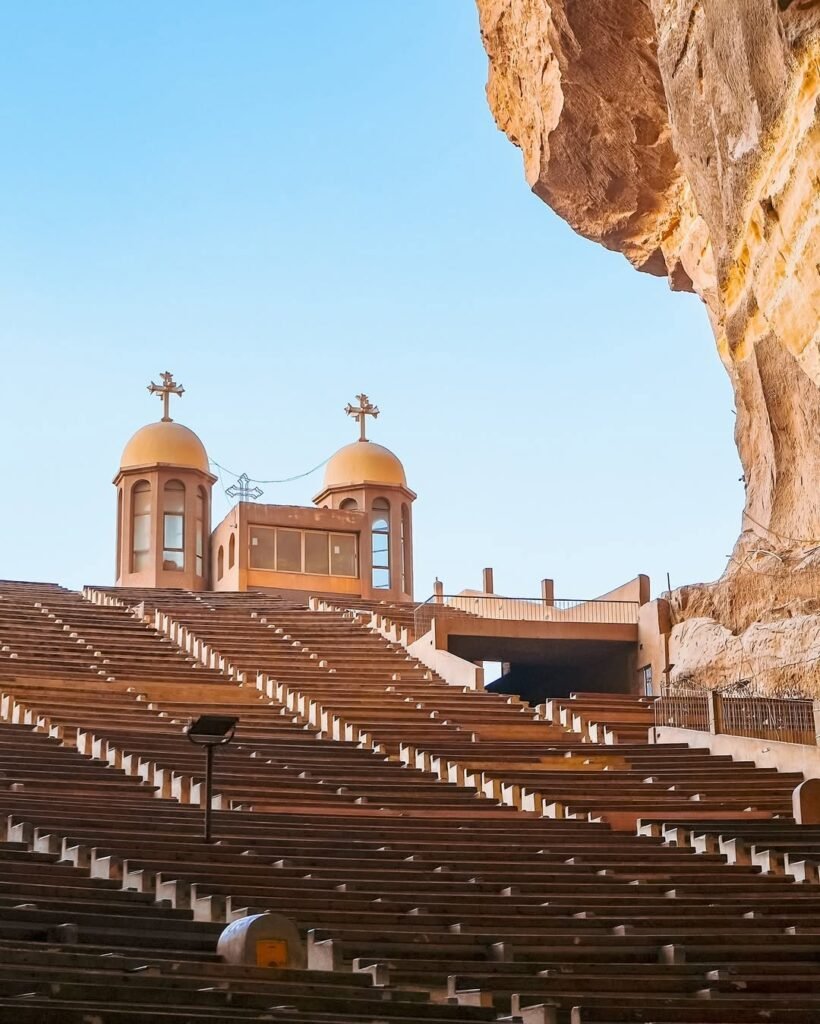
An amphitheatre carved into the Mokattam cliff above the Zabbaleen quarter, seating twenty thousand.
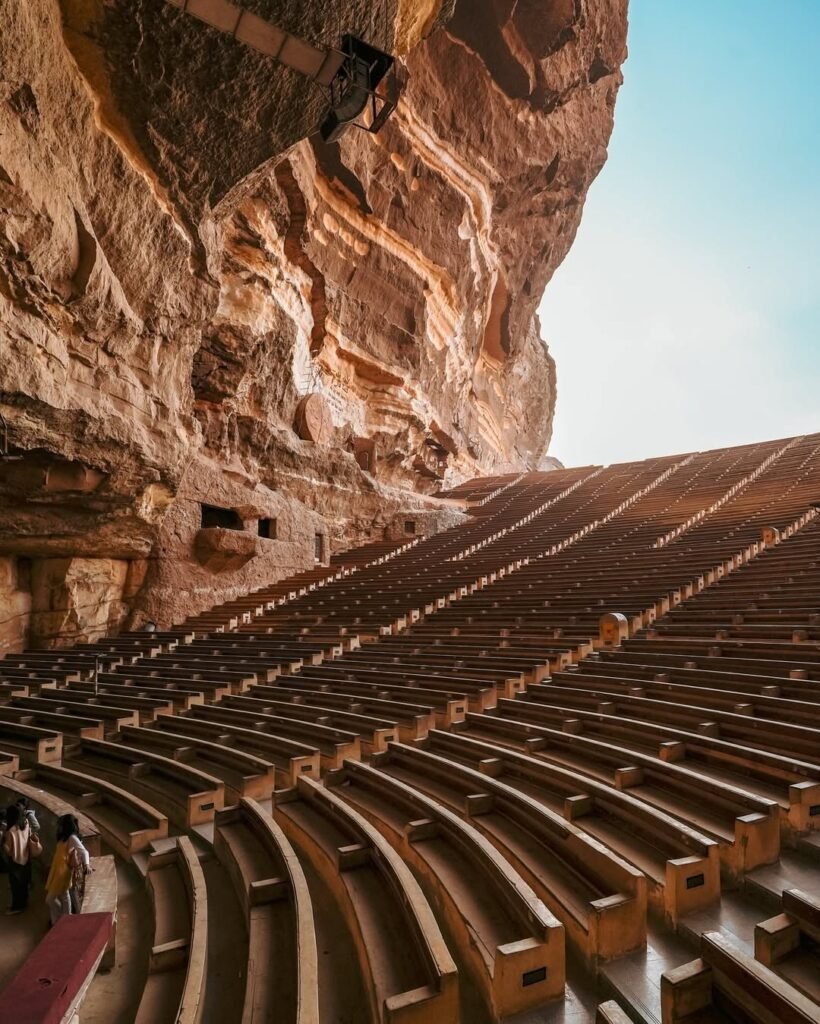
Some places don’t need a grand building or an ornate façade to leave a lasting impression. The Cave Church in the Mokattam Hills is one of them: a set of churches and halls carved into the rock, where the rugged hillside, Coptic architecture and sculpted art all come together.
The site is known as the Monastery of St Simon the Tanner (Deir Samaan El-Kharraz), or Deir Samaan El-Dabbagh. It lies in Mokattam near Manshiyat Nasser, and the Cairo Governorate considers it one of the area’s most important religious and architectural landmarks.
Where is the Cave Church?
The Cave Church is set into the Mokattam Hills in the El-Abageya area, near Manshiyat Nasser in eastern Cairo. Getting there takes you out of the built-up city into a completely different landscape, where rock faces and churches carved into the hillside come into view.
Why is it called the Cave Church?
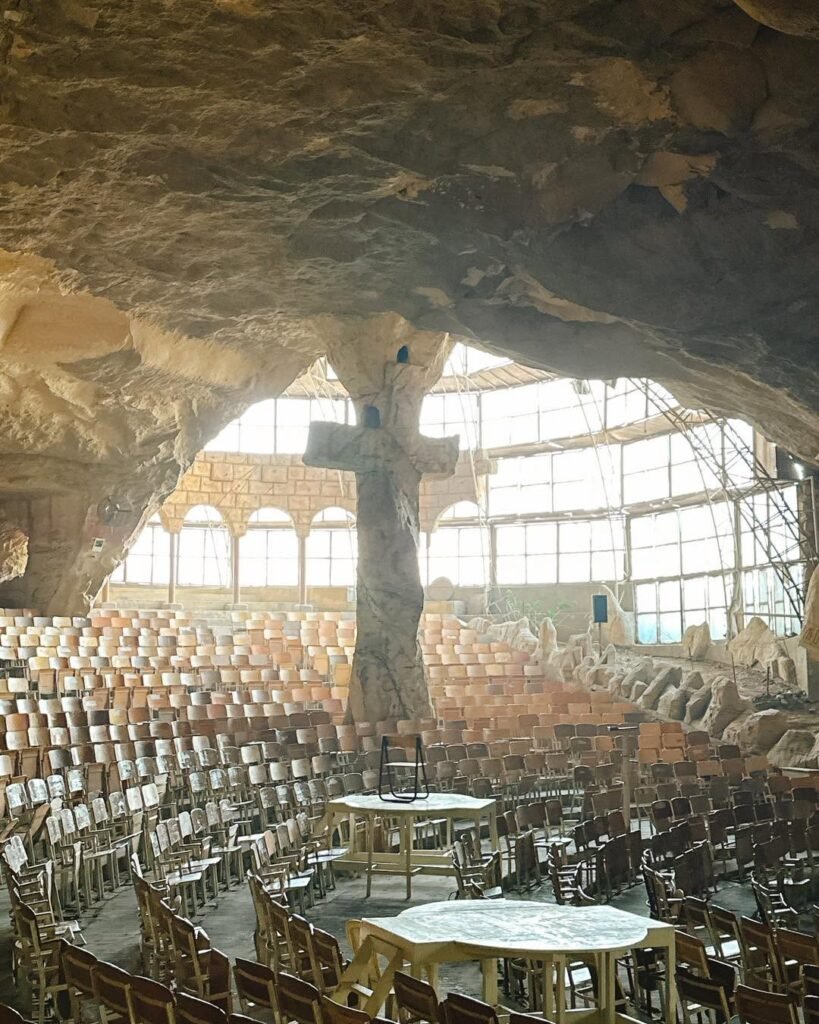
The name is more than a description: the main church itself sits inside a huge rock hollow in the hillside, and the monastery includes several churches and halls created inside the caves.
The site developed gradually, especially after the 1974 discovery of the cave believed to have held the tomb of St Simon. Work then expanded, and parts of the hill were turned into churches and prayer halls.
The Monastery of St Simon the Tanner
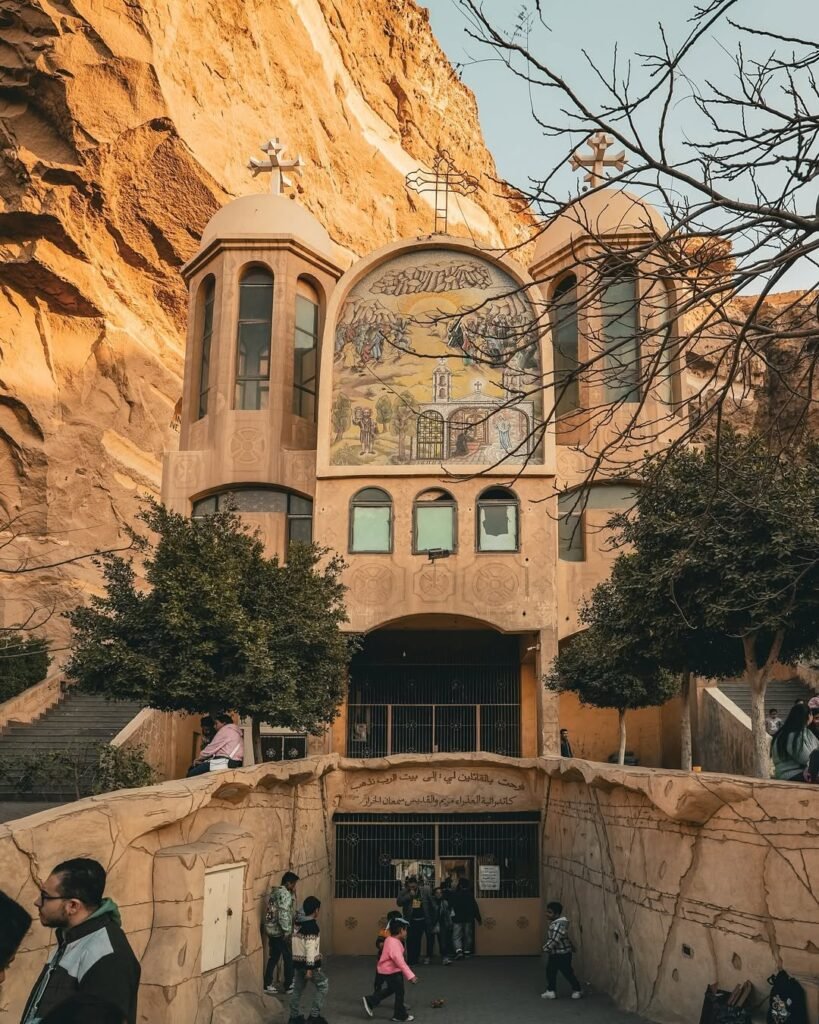
The monastery isn’t just one church but a complex of several, among them the Cathedral of the Virgin Mary and St Simon the Tanner, the Church of Anba Abraam Ibn Zaraa, the Church of St Mark, and other churches within the hillside. According to the Cairo Governorate, the monastery currently has six Orthodox churches.
One of the most striking things here is the artwork carved directly into the rock, which gives the place a character you won’t find in conventional churches.
The story of St Simon the Tanner
The monastery is named after St Simon the Tanner, who worked tanning leather and mending shoes. In Coptic tradition his life is linked to the miracle of the moving of the Mokattam mountain during the reign of the Fatimid caliph Al-Muizz li-Din Allah.
The story is told as part of the Coptic heritage surrounding the saint and the monastery, and the Mokattam Hills and the churches within them have become an important part of the area’s religious and historical memory.
What makes a visit to the Cave Church special?
A visit here is quite unlike visiting an ordinary church – the setting itself is part of the experience. You can see:
- Churches hewn out of the rock.
- Carvings and images on the rock walls.
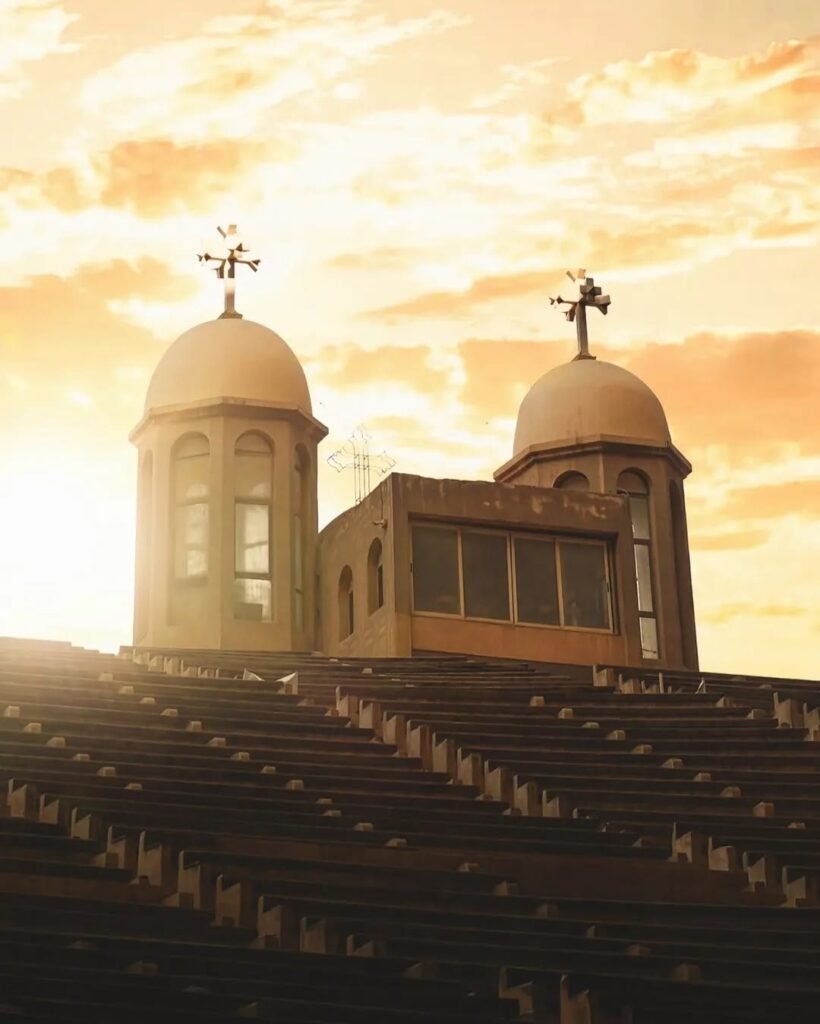
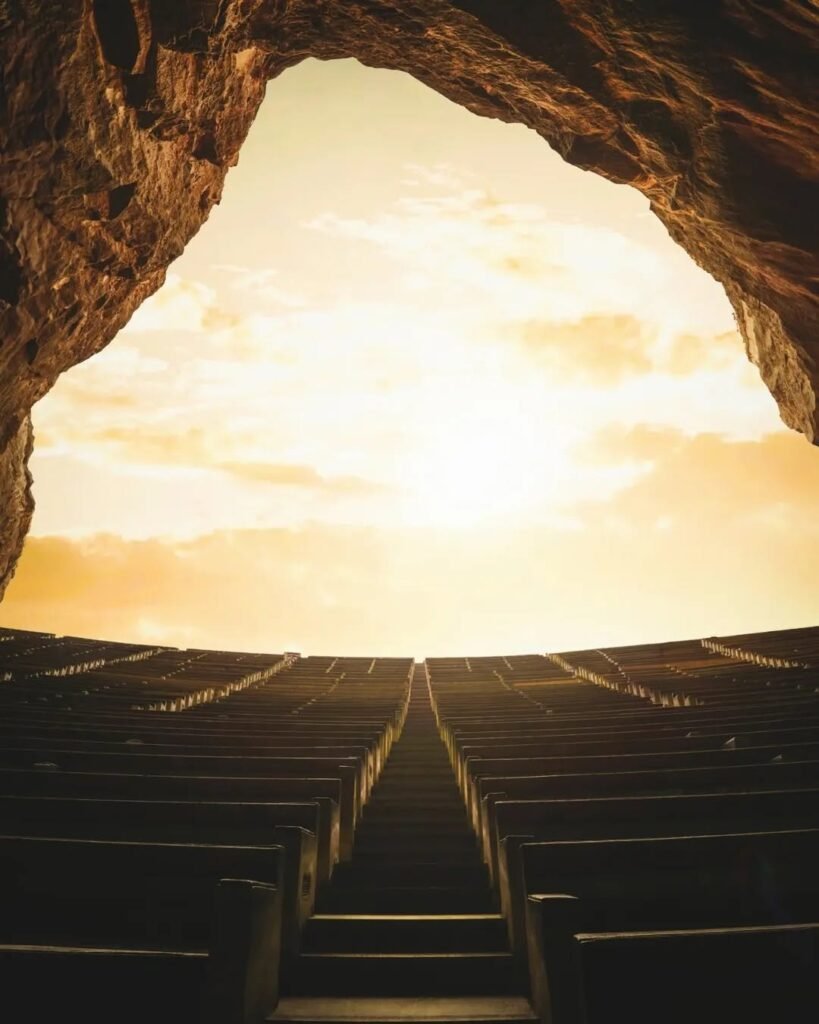
- The tiered stone seating of the main church.
- Caves that have been turned into places of prayer.
- Unusual views over Mokattam and Manshiyat Nasser.
The main church holds very large congregations and is known for its amphitheatre-style design within the rock cave.
The Cave Church as a Cairo landmark
Beyond its religious role, the Cave Church is a remarkable example of how a natural setting can be used to create a building with real architectural and artistic character. That’s why visitors come to learn about the area’s history and see the churches carved into the Mokattam Hills.
If you’re exploring Cairo’s more unusual places, the Cave Church and the Monastery of St Simon the Tanner deserve a spot on your list.