
-
 by
Things in Cairo
- 17 October 2026
- 0 Comments

- Date
- 9 February 2027 – 9 March 2027
- Venue
- Across Cairo
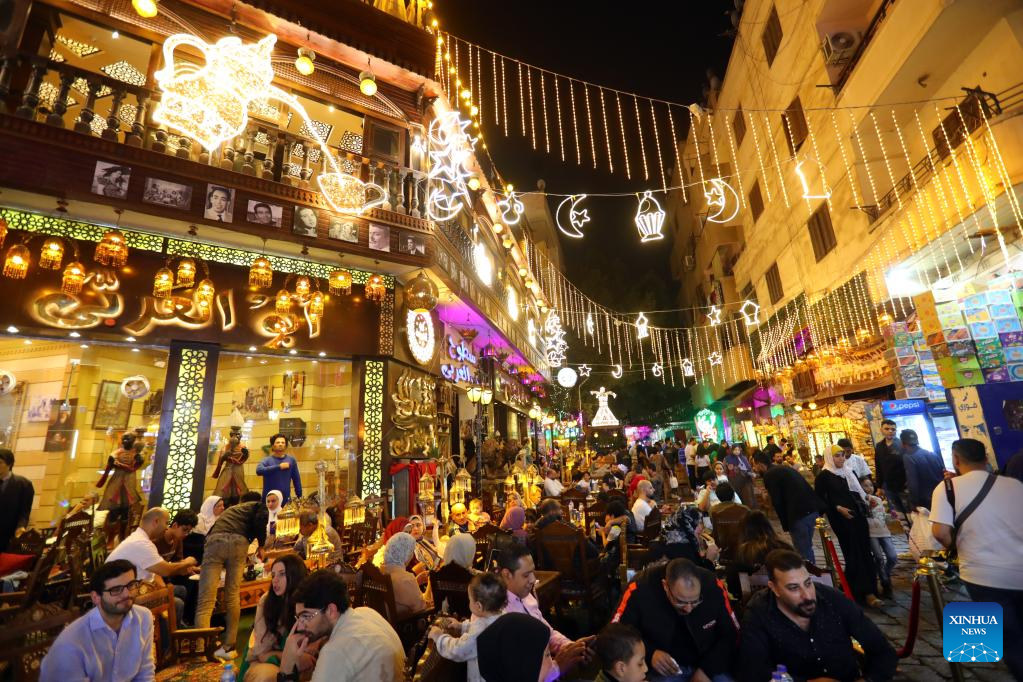
Cairo changes rhythm during Ramadan: streets are decorated with lanterns and lights, restaurants and hotels fill with iftar meals, and Ramadan tents and gatherings carry on until suhoor.
Ramadan Nights in Cairo: Best Places, Traditions and Things to Do After Sunset
Ramadan nights in Cairo are among the most distinctive times to experience the city.
After sunset, Cairo changes rhythm completely.
Restaurants fill for iftar, mosques prepare for Taraweeh prayers, lanterns and decorations light up balconies and streets, cafés stay open late, and historic areas such as Al-Hussein, Khan El-Khalili, Al-Muizz Street, and Al-Ghuriya become especially lively.
For visitors, Ramadan offers two very different versions of Cairo in the same day.
During daylight hours, the city can feel quieter in some areas as people are fasting and many restaurants operate on reduced schedules.
After the Maghrib call to prayer, the atmosphere changes quickly.
Families gather for iftar, streets become busier again, cultural venues begin evening performances, and social life continues well past midnight.
In 2026, Egypt’s Ministry of Tourism promoted the season under the campaign “Ramadan in Egypt is a Story,” highlighting historic mosques during the day and the festive atmosphere of streets, Ramadan tents, and cultural events at night.
What Makes Ramadan Nights in Cairo Special?
Ramadan is not simply a month of fasting.
In Cairo, it changes:
- When people eat
- When restaurants become busy
- When families visit one another
- How late cafés remain active
- The atmosphere around mosques
- Shopping hours
- Entertainment schedules
- Street decorations
- Cultural programming
Many people stay awake much later than usual, especially around weekends and during the final third of the month.
The period between iftar and suhoor becomes the center of social life.
When Does a Ramadan Night Begin?
The evening effectively starts at Maghrib, sunset, when the day’s fast ends.
The general rhythm is:
Sunset: Iftar
↓
After dinner: Family time or coffee
↓
Isha: Evening prayer
↓
Taraweeh: Special Ramadan prayers
↓
Late evening: Cafés, cultural events, shopping and walks
↓
Before dawn: Suhoor
↓
Fajr: Beginning of the next fasting day
This unusual schedule is one of the reasons Cairo can remain active deep into the night during Ramadan.
Iftar in Cairo
Iftar is the meal that breaks the daily fast at sunset.
The first minutes after Maghrib are usually very quiet on Cairo’s streets because families are eating.
People traditionally break the fast with water and dates before moving on to the main meal.
Popular Egyptian Ramadan dishes can include:
- Soup
- Sambousek
- Rice
- Molokhia
- Mahshi
- Grilled meat or chicken
- Rokak
- Pasta dishes
- Salads
- Ramadan drinks
Large family tables are an important part of the month.
Ramadan Drinks
Ramadan has its own group of drinks that become especially visible across Cairo.
Common options include:
- Qamar El-Din
- Karkadeh
- Tamarind
- Kharoub
- Sobia
- Licorice drink
Street vendors, juice shops, restaurants, and family homes prepare them in large quantities around sunset.
Qatayef and Kunafa
Ramadan desserts are one of the most recognizable parts of the season.
Kunafa
Thin pastry strands are baked with syrup and may be filled with:
- Cream
- Nuts
- Cheese
- Chocolate
- Modern dessert fillings
Qatayef
Small pancakes are folded and filled with nuts, cream, or other fillings before frying or baking.
During Ramadan, pastry shops often become extremely busy after iftar.
What Is Suhoor?
Suhoor is the final meal eaten before the fasting day begins.
In Cairo, suhoor can be anything from a simple home meal to a late-night social event.
Traditional foods include:
- Ful
- Eggs
- Cheese
- Yogurt
- Baladi bread
- Falafel
Many restaurants and cafés offer dedicated suhoor menus during Ramadan.
For some people, meeting friends for suhoor at 1 or 2 AM is as much a part of Ramadan as iftar itself.
1. Spend the Evening Around Al-Hussein
The Al-Hussein district is one of the strongest places to experience Ramadan nights in Cairo.
The area combines:
- Imam Al-Hussein Mosque
- Khan El-Khalili
- Al-Azhar
- Traditional cafés
- Sweet shops
- Historic streets
- Religious gatherings
In 2026, the first Taraweeh night at Imam Al-Hussein Mosque attracted large numbers of worshippers, with prominent Quran reciters participating in the prayer.
The area becomes especially atmospheric after Taraweeh.
2. Walk Through Khan El-Khalili at Night
Khan El-Khalili is always busy, but Ramadan changes the mood.
After iftar, the historic market fills with:
- Families
- Tourists
- Shoppers
- Café visitors
- Lantern sellers
- Sweet shops
- People heading toward Al-Hussein
The lights and decorations make evening the best time for many visitors.
You can combine Khan El-Khalili with Al-Muizz Street and nearby historic Cairo.
3. Explore Al-Muizz Street After Iftar
Al-Muizz Street is one of Cairo’s best Ramadan walking routes.
A possible route is:
Bab Al-Futuh
↓
Al-Muizz Street
↓
Bayn Al-Qasrayn
↓
Khan El-Khalili
↓
Al-Hussein
↓
Al-Ghuriya
During Ramadan, the historic facades, lanterns, shop lights, and evening crowds create a very different atmosphere from a daytime visit.
If photography is your main interest, arrive before the largest late-evening crowds.
4. Visit Al-Ghuriya
Al-Ghuriya is another excellent area for Ramadan nights.
Located south of Al-Azhar and Khan El-Khalili, it connects naturally with:
- Al-Muizz
- Bab Zuweila
- Khayamiya
- Wekalet Al-Ghuri
- Darb Al-Ahmar
The combination of historic architecture, shops, cafés, and evening cultural activity makes it especially suitable for a long Ramadan walk.
5. Walk Along Khayamiya Street
Khayamiya Street is particularly relevant during Ramadan because traditional decorative textiles and colorful patterns fit naturally with the season’s visual identity.
The street lies near Bab Zuweila and can be added to a wider Islamic Cairo route.
A good evening route is:
Al-Hussein → Al-Ghuriya → Bab Zuweila → Khayamiya Street
6. Experience Taraweeh Prayer
Taraweeh is the special night prayer performed during Ramadan after Isha.
Major Cairo mosques can attract very large congregations.
Important places include:
- Al-Azhar Mosque
- Imam Al-Hussein Mosque
- Sayyida Zeinab Mosque
- Sayyida Nafisa Mosque
- Amr Ibn Al-As Mosque
- Large neighborhood mosques
For Muslim visitors, attending Taraweeh in a historic Cairo mosque can be one of the most memorable experiences of Ramadan.
For non-Muslim visitors, remember that this is primarily a religious act rather than a performance.
Be respectful around entrances, prayer areas, and worshippers.
7. Visit Al-Azhar Mosque
Al-Azhar is one of Cairo’s most important Islamic institutions and becomes especially significant during Ramadan.
The area around the mosque becomes busy around prayer times and during evening religious activities.
You can combine Al-Azhar with:
- Al-Hussein
- Khan El-Khalili
- Al-Muizz Street
- Al-Ghuriya
Because prayer schedules affect access, visitors should plan around worship times.
8. Ramadan Lanterns in Cairo
The fanous Ramadan, or Ramadan lantern, is one of Egypt’s most recognizable symbols of the month.
Lanterns appear:
- On balconies
- In shop windows
- Across streets
- Inside restaurants
- At homes
- In Ramadan tents
Cairo Governorate maintains a cultural history section specifically dedicated to Ramadan in Cairo, including the history of the Ramadan lantern and Ramadan cannon.
Where Can You See Ramadan Lanterns?
Good areas include:
- Islamic Cairo
- Al-Hussein
- Khan El-Khalili
- Sayyida Zeinab
- Downtown
- Traditional residential neighborhoods
Lantern shops become especially noticeable before and during the first weeks of the month.
9. Ramadan Decorations
Neighborhood streets often decorate themselves with strings of colorful fabric, lights, lanterns, and handmade ornaments.
Some streets compete informally to create the most elaborate displays.
The result varies dramatically from one neighborhood to another.
This is one reason Ramadan is especially interesting for street photography.
10. Ramadan Tents
Ramadan tents, or kheiam Ramadan, are special seasonal venues that may offer:
- Iftar
- Suhoor
- Live music
- Oriental entertainment
- Tanoura
- Traditional décor
- Shisha in some venues
- Late-night social gatherings
Some are organized by hotels and restaurants.
Others are more cultural and community-focused.
The Ministry of Tourism’s 2026 Ramadan campaign specifically highlighted Ramadan tents as part of the evening experience visitors can find in Egypt.
11. Cultural Nights During Ramadan
Ramadan is one of Egypt’s most active seasons for cultural programming.
In 2026, the Ministry of Culture announced a nationwide Ramadan program under the title “Egyptian Ramadan”, featuring more than 4,560 cultural and artistic events across Cairo and other governorates.
Programming included:
- Folk arts
- Music
- Poetry
- Storytelling
- Sufi-themed events
- Children’s activities
- Puppet shows
- Circus performances
- Cultural discussions
Schedules change every year, so check official cultural calendars during your visit.
12. Traditional Storytelling and Al-Sira Al-Hilaliya
Ramadan cultural programming often includes traditional forms of Egyptian and Arab storytelling.
In 2026, the Ministry of Culture included Al-Sira Al-Hilaliya storytelling within its Ramadan cultural program, alongside poetry evenings and cultural cafés.
For visitors interested in intangible cultural heritage, these events can offer something very different from museum sightseeing.
13. Religious Chanting and Sufi Music
Ramadan evenings often include:
- Inshad
- Religious chanting
- Sufi poetry
- Quran recitation
- Dhikr-related cultural performances
Some events take place in formal cultural venues, while others happen around mosques and historic neighborhoods.
The strongest atmosphere is often found around Al-Hussein and other areas associated with Ahl Al-Bayt.
14. Ramadan at Wekalet Al-Ghuri
The historic Al-Ghuri complex and surrounding area are often associated with traditional performances and cultural activities.
When Ramadan programs are scheduled, this part of Islamic Cairo can be an excellent place to combine:
- Historic architecture
- Evening walks
- Traditional performances
- Al-Ghuriya
- Khan El-Khalili
Always check the current program before visiting because event schedules change.
15. Visit Darb Al-Ahmar at Night
Darb Al-Ahmar is a strong alternative to the busiest Al-Hussein routes.
The district includes:
- Historic mosques
- Old houses
- Local streets
- Workshops
- Khayamiya
- Routes toward Al-Azhar Park
Ramadan evenings here can feel more local and residential than the main Khan El-Khalili area.
16. Al-Azhar Park After Iftar
Al-Azhar Park can be a good place for a relaxed Ramadan evening.
You can combine:
Iftar
↓
Sunset and city views
↓
Walk through the park
↓
Darb Al-Ahmar or Islamic Cairo
Check Ramadan opening hours because schedules can differ from the rest of the year.
17. Have Suhoor in Zamalek
Zamalek offers a very different Ramadan experience from Islamic Cairo.
Instead of historic streets and traditional markets, you will find:
- Restaurants
- Cafés
- Hotels
- Nile views
- Suhoor menus
- Late-night social venues
This makes Zamalek useful for visitors who want a comfortable late-night meal after exploring the city.
18. Ramadan Nights in Maadi
Maadi is another good option for late-night dining.
Its restaurants and cafés often operate late during Ramadan, and the area can feel calmer than Downtown or Islamic Cairo.
You can combine:
Iftar or coffee → Nile Corniche → Suhoor
19. Spend Time Beside the Nile
The Nile remains active late into Ramadan nights.
Popular areas include:
- Zamalek
- Garden City
- Downtown
- Manial
- Maadi
After iftar, families and friends head to the river for walks, cafés, and boat rides.
The best time can be after Taraweeh, when the city becomes more active again.
20. Take a Late-Night Felucca
A felucca ride after iftar can be one of the most relaxing Ramadan experiences.
The city lights, cooler temperatures, and late-night atmosphere make evening rides particularly appealing.
If you go during a busy weekend night, expect higher demand.
Agree on the price and duration before boarding.
21. Downtown Cairo During Ramadan
Downtown has its own Ramadan character.
You may find:
- Decorated cafés
- Late-night restaurants
- Shopping
- Historic architecture
- Busy sidewalks after iftar
- Cultural venues
The area can also be combined with the Nile or Zamalek in the same evening.
22. Mawaed Al-Rahman
One of Ramadan’s strongest charitable traditions is the Mawaed Al-Rahman, or charitable iftar tables.
These provide free meals at sunset for people who need them, travelers, workers, or anyone invited to join.
For Ramadan 2026, Cairo Governorate instructed districts to facilitate the establishment of approved Mawaed Al-Rahman without charging organizers fees, while ensuring safety and cleanliness requirements.
A major “Iftar Sa’em” charitable campaign was also launched ahead of Ramadan 2026 to support vulnerable families across Egypt.
23. The Ramadan Cannon
The Ramadan cannon, or Midfa Al-Iftar, is one of Cairo’s traditional symbols of sunset during Ramadan.
Historically, the cannon announced that the daily fast had ended.
Today, the tradition remains part of Cairo’s Ramadan cultural memory even though most people now rely on television, mobile apps, and mosque calls to prayer.
Cairo Governorate includes the story of the Ramadan cannon among its official accounts of Ramadan traditions in the capital.
24. The Mesaharaty
Another traditional Ramadan figure is the Mesaharaty.
Historically, the Mesaharaty walked through residential streets before dawn, beating a small drum and calling residents to wake up for suhoor.
The tradition is less universal today, but it still survives in some neighborhoods as part of Ramadan culture.
For visitors, hearing a Mesaharaty in a local district can be one of the month’s most memorable experiences.
25. Shopping After Iftar
Many Cairo shopping districts become significantly busier after iftar.
Popular areas can include:
- Ataba
- Mouski
- Khan El-Khalili
- Downtown
- Abbas El Akkad
- Heliopolis
- Shopping malls
During Ramadan, shopping hours often shift later into the night.
The final week before Eid al-Fitr is particularly busy as families buy clothes, gifts, kahk, and holiday supplies.
26. Ramadan in Old Cairo
Old Cairo offers a different kind of Ramadan experience.
The area is quieter than Al-Hussein but is deeply connected to Cairo’s religious history.
You can visit:
- Amr Ibn Al-As Mosque
- Fustat
- Historic churches
- The Religious Complex
Amr Ibn Al-As Mosque is particularly significant in Islamic history and can attract worshippers during Ramadan.
27. The Final Ten Nights of Ramadan
The last ten nights are considered especially important spiritually.
Mosques become busier, particularly during:
- Taraweeh
- Tahajjud or Qiyam prayers
- Laylat Al-Qadr observances
Many Muslims spend longer periods in prayer and Quran recitation.
For visitors, this means major mosques may be much more crowded than earlier in the month.
Laylat Al-Qadr
Laylat Al-Qadr, the Night of Power, is considered the most spiritually important night of Ramadan.
Its exact date is not known, but it is traditionally sought during the odd-numbered nights of the final ten days.
Mosques across Cairo may remain especially active late into the night during this period.
This is primarily a religious occasion, so visitors should be particularly respectful around prayer areas.
What Is Cairo Like Before Iftar?
The hour before sunset has a very distinctive atmosphere.
You may see:
- People rushing home
- Food deliveries
- Shops preparing to close briefly
- Volunteers distributing water and dates
- Tables being prepared
- Roads becoming unusually quiet just before Maghrib
Then, within minutes of sunset, many streets can feel almost empty.
Roughly an hour later, activity begins returning.
Is Ramadan a Good Time for Tourists to Visit Cairo?
Yes, if you understand the different daily rhythm.
Ramadan can offer:
- Cooler and quieter sightseeing periods during parts of the day
- Unique evening atmosphere
- Special food
- Cultural programming
- Religious architecture at its most active
- Decorations and lanterns
- Late-night social life
However, restaurant hours and attraction schedules may differ from normal.
Are Restaurants Open During the Day?
Some are, especially in hotels, tourist districts, malls, and areas serving non-fasting customers.
Others may open only shortly before iftar.
Do not assume normal daytime dining hours.
If you are not fasting, eating discreetly during daylight hours is considerate, especially in traditional or religious neighborhoods.
Can Non-Muslims Enjoy Ramadan Nights?
Yes.
Ramadan nights are open social and cultural experiences across much of the city.
Visitors can:
- Attend cultural events
- Walk through decorated streets
- Eat iftar
- Try suhoor
- Visit markets
- Take a Nile ride
- Explore historic Cairo
The main rule is respect for fasting and religious practices.
Ramadan Etiquette for Visitors
A few simple guidelines help:
- Dress respectfully around mosques.
- Avoid eating conspicuously in very traditional areas during fasting hours.
- Do not interrupt people praying.
- Ask before photographing worshippers.
- Expect schedule changes.
- Avoid criticizing slow service around iftar.
- Remember that staff may also be fasting.
- Allow extra time for transport just before sunset.
Traffic Before Iftar
Traffic can become particularly difficult in the hour before sunset.
People are trying to reach home before Maghrib, and roads can become heavily congested.
If possible:
- Arrive at your iftar location early.
- Avoid long cross-city journeys immediately before sunset.
- Use the metro where practical.
- Walk within historic districts instead of repeatedly taking cars.
Best Time to Explore Ramadan Cairo
For the strongest atmosphere:
8 PM to around 1 AM
is often a good window.
For a full experience:
Late afternoon → iftar → Taraweeh → historic walk → suhoor
This lets you see how the city transforms over several hours.
Suggested Ramadan Night in Islamic Cairo
Late Afternoon
Arrive around Al-Azhar or Al-Hussein.
Sunset
Have iftar nearby.
After Iftar
Walk through Khan El-Khalili.
Later
Explore Al-Muizz Street.
After Taraweeh
Continue toward Al-Ghuriya and Khayamiya Street.
Late Night
Have tea, coffee, or suhoor.
Suggested Relaxed Ramadan Night
Iftar in Zamalek
↓
Nile walk
↓
Felucca
↓
Coffee
↓
Late suhoor
Suggested Cultural Ramadan Night
Historic Cairo walk
↓
Iftar
↓
Taraweeh nearby
↓
Cultural performance
↓
Traditional dessert
↓
Suhoor
Check the annual Ministry of Culture schedule because programming changes each Ramadan.
Best Places for Ramadan Nights in Cairo
For Traditional Atmosphere
- Al-Hussein
- Khan El-Khalili
- Al-Muizz Street
- Al-Ghuriya
- Darb Al-Ahmar
For Religious Atmosphere
- Al-Azhar
- Imam Al-Hussein Mosque
- Sayyida Zeinab
- Sayyida Nafisa
- Amr Ibn Al-As Mosque
For Dining and Suhoor
- Zamalek
- Maadi
- Downtown
- Heliopolis
- New Cairo
For Photography
- Khan El-Khalili
- Al-Muizz Street
- Khayamiya
- Traditional residential neighborhoods
- Al-Hussein
Frequently Asked Questions About Ramadan Nights in Cairo
What time does Cairo become busy during Ramadan?
Activity rises quickly after iftar and often remains strong until after midnight, especially around restaurants, cafés, shopping areas, and historic districts.
Where is the best Ramadan atmosphere in Cairo?
Al-Hussein, Khan El-Khalili, Al-Muizz Street, Al-Ghuriya, and Darb Al-Ahmar are among the strongest options.
Can tourists go out during Ramadan nights?
Yes. Ramadan nights are one of the best times for visitors to experience Cairo’s street life, food, decorations, and cultural events.
What is Taraweeh?
Taraweeh is a special night prayer performed during Ramadan after the Isha prayer.
What is suhoor?
Suhoor is the final meal eaten before dawn and the start of the next fasting day.
What should I eat during Ramadan in Cairo?
Try kunafa, qatayef, ful for suhoor, traditional Ramadan drinks, and an Egyptian iftar meal.
Are shops open late?
Yes. Many shopping areas remain open much later than usual during Ramadan.
Is Khan El-Khalili open at night during Ramadan?
The area is especially lively after iftar, although individual shop hours vary.
Can non-Muslims enter mosques during Ramadan?
Access depends on the mosque and prayer schedule. During major prayers, some areas may be reserved for worshippers.
Is Ramadan a good time to visit Cairo?
Yes, especially for travelers interested in Egyptian culture, food, historic neighborhoods, and religious traditions.
Quick Information
Season: Ramadan
Best time to go out: After iftar until late night
Best traditional area: Al-Hussein and Khan El-Khalili
Best historic walk: Al-Muizz Street and Al-Ghuriya
Best religious experience: Taraweeh at a major mosque
Best food experience: Iftar + Ramadan desserts + suhoor
Best relaxed evening: Zamalek and the Nile
Best photography: Islamic Cairo after sunset
Main challenge: Traffic before iftar
Best advice: Plan your evening around sunset and prayer times
Read More on ThingsInCairo
- Al-Muizz Street
- Darb Al-Ahmar
- Khayamiya Street
- Al-Azhar Park
- Old Cairo Guide
- Amr Ibn Al-As Mosque
- Zamalek Area Guide
- Maadi Area Guide
Meta Tags
Meta Title: Ramadan Nights in Cairo | Best Places, Iftar, Suhoor & Things to Do
Meta Description: Discover Ramadan nights in Cairo, from Al-Hussein and Khan El-Khalili to iftar, suhoor, Taraweeh, lanterns, cultural events, Nile outings and visitor tips.
H1: Ramadan Nights in Cairo
Suggested Slug: ramadan-nights-cairo
Many places change their daytime opening hours, and traffic peaks just before iftar. The date is approximate because it depends on the lunar calendar, and will be updated once it is officially announced.