
-
 by
Things in Cairo
- 23 October 2026
- 0 Comments

Cairo’s street food is one of the best ways to experience everyday Egyptian life. From small breakfast counters serving warm fava beans and freshly fried taameya to busy koshari restaurants and bakeries preparing meat-filled hawawshi, the city offers plenty of traditional dishes to try without planning an expensive meal.
Many of these foods are part of Egyptians’ daily routines rather than dishes reserved for special occasions. Ful and taameya are popular breakfast choices, koshari makes a filling lunch or dinner, and hawawshi is a satisfying option when you want something hot and savoury.
Whether you are visiting Cairo for the first time or exploring beyond its main attractions, this guide introduces four essential Egyptian street foods, explains what makes each one distinctive, and offers practical advice on where and how to try them.
1. Koshari: Egypt’s Famous Mix of Rice, Pasta and Lentils
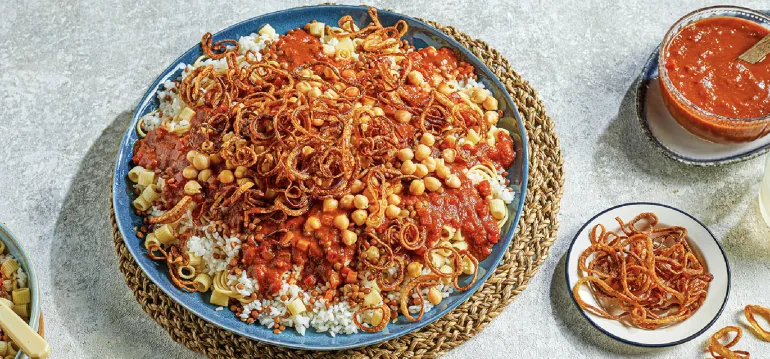
Koshari, also spelled koshary, is one of Egypt’s best-known dishes. It combines rice, lentils, pasta and chickpeas, topped with tomato sauce and crispy fried onions. Garlic vinegar and chilli sauce are commonly served alongside it, allowing diners to adjust the flavour to their preference.
The combination might sound unusual if you have never tried it, but the ingredients work together to create a filling meal with contrasting textures and flavours. The lentils and rice provide a hearty base, the pasta adds substance, and the tomato sauce gives the dish a tangy finish.
How to order koshari
Koshari is usually served in a bowl, with different portion sizes available. If you enjoy spicy food, add some chilli sauce. If you prefer a milder meal, start with the tomato sauce and add the garlic vinegar gradually.
A useful phrase is “shatta on the side” if you would rather control the amount of chilli yourself.
Koshari is generally a suitable option for vegetarians and vegans, provided the ingredients and preparation meet their dietary requirements.
Where to try koshari in Cairo
One well-known option is Koshary Abou Tarek, a dedicated koshari restaurant in Downtown Cairo. Its address is 16 Maarouf Street, near Champollion Street and Gamal Abdel Nasser Metro Station.
Its location makes it a convenient stop when exploring central Cairo. Check the restaurant’s website before visiting for current branch information and contact details.
Koshari is also widely available in neighbourhood restaurants throughout the city, so you do not necessarily need to travel across Cairo to try it.
2. Taameya: Egypt’s Version of Falafel
Taameya is Egypt’s traditional version of falafel. Unlike the chickpea-based falafel commonly found in several other Middle Eastern countries, Egyptian taameya is typically made from dried fava beans mixed with fresh herbs and seasonings.
The mixture is shaped into small patties and deep-fried until crisp on the outside. Inside, the herbs give it a distinctive green colour and a fresh, savoury flavour.
Taameya is particularly popular at breakfast, when it is often served with baladi bread, salad, tahini and pickles.
How Egyptians eat taameya
A taameya sandwich is one of the easiest ways to try this dish. The freshly fried patties are placed inside Egyptian flatbread and combined with ingredients such as tomato, cucumber, tahini or other sauces, depending on the shop.
You can also order taameya by the piece and share it with other breakfast dishes. For a more traditional meal, combine it with ful, bread and pickles.
For the best texture, choose a place where the patties are being fried regularly and served hot.
Where to try taameya and ful
El Tabei El Domyati is a recognised Egyptian breakfast restaurant specialising in ful and taameya. It is a useful option if you want to try these dishes in a dedicated breakfast setting rather than ordering from an unfamiliar street counter.
Traditional breakfast shops and local bakeries across Cairo also serve taameya sandwiches, often from early in the morning.
3. Ful Medames: A Traditional Egyptian Breakfast
Ful medames, commonly called ful, is a staple of Egyptian food culture. It consists of fava beans cooked slowly until soft, then seasoned according to taste.
Typical additions include cumin, lemon juice, garlic and oil. Some versions are served mashed, while others contain whole beans. Tomatoes, tahini, chopped vegetables and other toppings may also be available.
Ful is usually eaten with baladi bread, which is used to scoop up the beans and accompanying ingredients.
What does ful taste like?
Ful has a mild, earthy flavour and a soft, creamy texture. Its taste changes considerably depending on how it is seasoned and which toppings are added.
Lemon and cumin provide a fresh, aromatic flavour, while chilli adds heat. Oil makes the dish richer, and tahini creates a creamier finish.
If you are new to Egyptian food, ful is an approachable dish to try because you can customise it to suit your preferences.
How to order ful
You can order ful as a plate or inside a sandwich. If you are hungry, a ful sandwich with taameya is a classic combination. For a more substantial breakfast, add eggs, cheese, pickles and fresh bread.
Ful is naturally plant-based when prepared with beans, vegetables, oil and seasonings alone. However, ask about the ingredients if you follow a strict vegetarian or vegan diet.
Because ful is so widely eaten, you will find it in neighbourhood breakfast shops throughout Cairo. Busy establishments with a steady flow of customers can be a practical starting point for visitors.
4. Hawawshi: Egyptian Bread Stuffed with Spiced Meat
Hawawshi is a popular Egyptian savoury dish made by filling baladi bread with seasoned minced meat, often mixed with onion, pepper, herbs and spices. The filled bread is then baked or cooked until the meat is done and the outside becomes crisp.
The result is somewhere between a stuffed flatbread and a meat sandwich, with a rich filling and a toasted exterior.
Hawawshi is often eaten as a quick lunch, an evening meal or a substantial snack. It is especially appealing if you prefer grilled or baked savoury food to lentil-based dishes.
What should you expect when ordering hawawshi?
The traditional version features minced meat seasoned with vegetables and spices. Some restaurants offer variations with cheese, sausage or additional fillings.
Hawawshi is usually served hot, sometimes with tahini, pickles or salad. Let it cool slightly before taking your first bite, as the filling can retain heat.
If you are looking for a recognised specialist, Hawawshi El Refaie is a longstanding name associated with the dish. Its Abdeen location has been listed at 87 El Sheikh Rihan Street, near Abdeen Palace. Check current operating details before making a special trip.
You can also find hawawshi at Egyptian bakeries, grill shops and local restaurants across Cairo.
5. Other Egyptian Street Foods Worth Trying
Koshari, taameya, ful and hawawshi are an excellent introduction to Cairo’s street-food scene, but they are far from the only options.
If you have time to explore more of the city’s food culture, look out for these dishes as well.
Feteer meshaltet
Feteer is a layered Egyptian pastry made from thin sheets of dough. Depending on the shop and the filling, it can be served plain, with cheese or other savoury ingredients, or with sweet additions such as honey and sugar.
It is often rich and buttery, making it a good choice to share rather than order as an extra-large portion for yourself.
Liver sandwiches
Egyptian liver sandwiches are typically prepared with pieces of liver cooked with garlic, spices and other seasonings. They are commonly served in bread and may include chilli or other toppings.
They offer a different flavour from the milder ful and taameya sandwiches and are worth considering if you enjoy offal.
Sausage sandwiches
Egyptian sausage sandwiches are another filling street-food option. The sausage is generally cooked with seasonings and may be combined with peppers, onions or sauces.
Recipes vary by establishment, so ask about the ingredients if you have dietary restrictions.
Fresh juices and traditional drinks
Juice shops are a familiar part of Cairo’s streetscape. Depending on the season, you may find sugar-cane juice, mango juice and other fruit drinks.
For a traditional Egyptian drink, try karkadeh, a hibiscus infusion served hot or cold. Choose reputable juice shops with clean equipment and good ingredient-handling practices.
6. Where to Explore Cairo’s Street-Food Culture
Street food is available throughout Cairo, so the best area to explore often depends on the sights you plan to visit.
Downtown Cairo
Downtown is a practical starting point for visitors interested in established restaurants, busy streets and classic Egyptian dishes. It is also where you will find Koshary Abou Tarek, making it easy to combine a meal with a walk around central Cairo.
Islamic Cairo and Al-Muizz Street
A walk through Al-Muizz Street offers an opportunity to explore historic architecture, traditional commercial streets and nearby food shops.
You can combine the area with a broader visit to Darb Al-Ahmar, where historic streets and local neighbourhood life provide a different perspective on Cairo.
Food options and opening hours vary, so it is best to treat this as an area to explore rather than expect every specific dish to be available at every stop.
Old Cairo
Old Cairo is another worthwhile addition to a food-focused day. You can explore the area’s historic and religious landmarks and stop for a local meal nearby.
If your itinerary includes the Amr Ibn Al-As Mosque, consider planning your meal around your visit and checking nearby restaurants in advance.
7. A Simple One-Day Cairo Street-Food Plan
If you want to try several Egyptian dishes without spending the whole day travelling between restaurants, spread them across different meals rather than ordering everything at once.
Morning: Ful and taameya
Start with a ful sandwich and freshly fried taameya. Add baladi bread, pickles and tea if you want a traditional Egyptian breakfast.
Lunch: Koshari
Head to a dedicated koshari restaurant in Downtown Cairo. Choose a portion size that leaves you enough room to continue exploring, and add chilli sauce gradually.
Afternoon: A walk through historic Cairo
Explore Al-Muizz Street or another historic district. If you want a snack, look for feteer or a small sandwich from a busy establishment.
Evening: Hawawshi
Finish with freshly prepared hawawshi from a specialist or a well-regarded local restaurant. It is filling, so you may prefer to share it if you have already enjoyed a substantial lunch.
This is a flexible plan rather than a fixed food tour. Choose stops based on your accommodation, sightseeing schedule and current restaurant opening hours.
8. Practical Tips for Eating Street Food in Cairo
A little preparation can make your food experience more enjoyable, particularly if this is your first visit to Egypt.
- Look for freshly prepared food. Choose places where food is cooked to order or served hot and where ingredients are handled carefully.
- Check the flow of customers. A steady stream of diners can be a useful sign of turnover, although it does not guarantee food safety.
- Drink safe water. If you are unsure about the local water supply, choose sealed bottled water.
- Be selective with raw ingredients. Pay attention to how salads, garnishes and fresh juices are washed and handled.
- Carry small cash denominations. Some smaller food shops and street vendors may prefer cash, although payment methods vary.
- Ask about ingredients. Meat fillings, sauces and cooking methods can differ between establishments.
- Check current prices. Prices and portion sizes vary by restaurant and can change, so confirm the menu or price before ordering.
- Do not over-order. Egyptian portions can be filling, and sharing several dishes is a good way to sample more of the local cuisine.
- Allow time for busy periods. Popular restaurants can have queues, especially around meal times.
9. Vegetarian and Vegan Options
Cairo’s traditional street food includes several dishes that can suit vegetarian and vegan visitors.
Koshari is commonly prepared with rice, pasta, lentils, chickpeas, tomato sauce and fried onions. Ful is based on fava beans, while traditional taameya is made from fava beans and herbs.
However, recipes and preparation practices differ. If you follow a strict diet, ask whether the dish contains animal-derived ingredients and whether it is prepared separately from meat products.
Hawawshi traditionally contains minced meat, so it is not vegetarian. Some establishments offer vegetable-based variations, but you should confirm the ingredients before ordering.
Frequently Asked Questions
What is the most famous street food in Cairo?
Koshari is among Cairo’s best-known street foods. Its combination of rice, pasta, lentils, chickpeas, tomato sauce and crispy onions makes it a distinctive and filling Egyptian meal.
What is the difference between taameya and falafel?
Egyptian taameya is typically made from fava beans and fresh herbs, while falafel in many other countries is made primarily from chickpeas. Both are fried patties, but their ingredients and flavour can differ.
Is Cairo street food suitable for vegetarians?
Yes. Koshari, ful and traditional taameya can all be vegetarian or vegan. Always check the ingredients and preparation method if you have strict dietary requirements.
Where can I try koshari in Cairo?
Koshary Abou Tarek in Downtown Cairo is a recognised option. You can also find dedicated koshari shops throughout the city.
Is street food in Cairo safe for tourists?
Many visitors enjoy Cairo’s street food, but food safety depends on preparation, storage, cleanliness and handling. Choose establishments that prepare food properly, serve hot dishes hot, and handle ingredients hygienically.
What should I eat for an Egyptian breakfast?
Ful and taameya are two classic choices. Try them with baladi bread, pickles and tahini for a traditional breakfast.
How much does Cairo street food cost?
Street food is generally considered an affordable way to eat in Cairo, but prices vary according to the dish, portion size, neighbourhood and establishment. Check current prices before ordering rather than relying on outdated estimates.
Discover More of Cairo
Cairo’s street food offers more than a quick meal: it is an introduction to the ingredients, routines and flavours that shape everyday life in Egypt. Start with koshari, taameya, ful and hawawshi, then explore additional dishes as you discover different neighbourhoods.
To plan the rest of your trip, explore our guides to Islamic Cairo and Old Cairo for more places to visit and experiences to add to your itinerary.